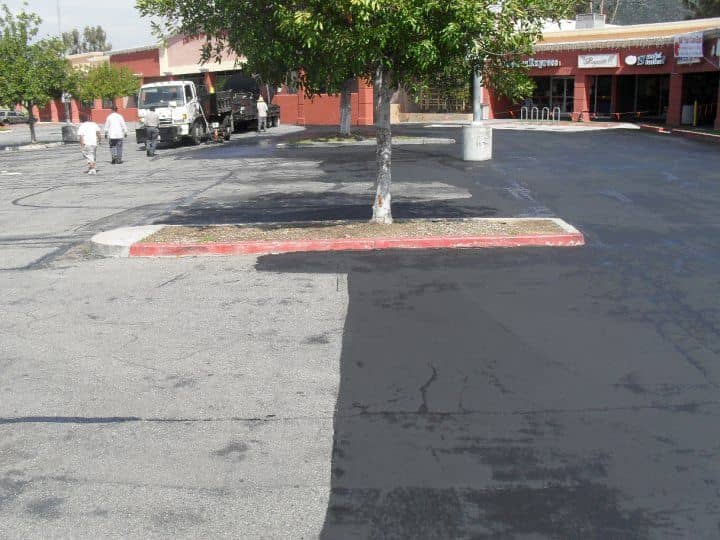
Fresh sealcoat is the most dramatic before-and-after in our business. A tired gray lot turns deep black in a single day. But sealcoat is more than cosmetic, and it isn't a cure-all. Here's what it does.
The problem: oxidation
When oxygen, ultraviolet light and pollutants contact the asphalt binder, the surface slowly breaks down. The pavement grays, turns brittle and starts to crack. In Southern California, heavy sun exposure speeds this up by burning away the binder.
What sealcoat does
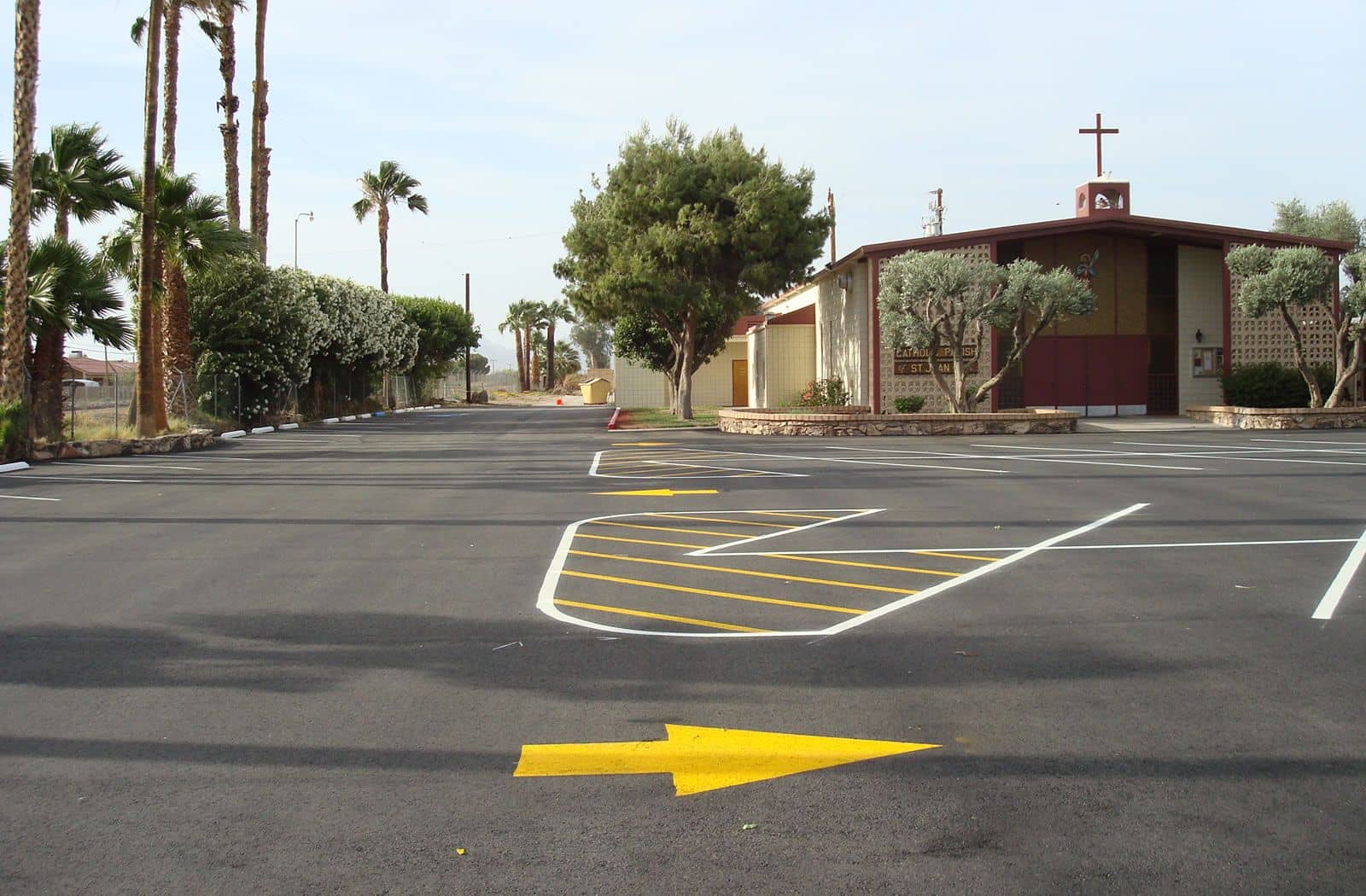
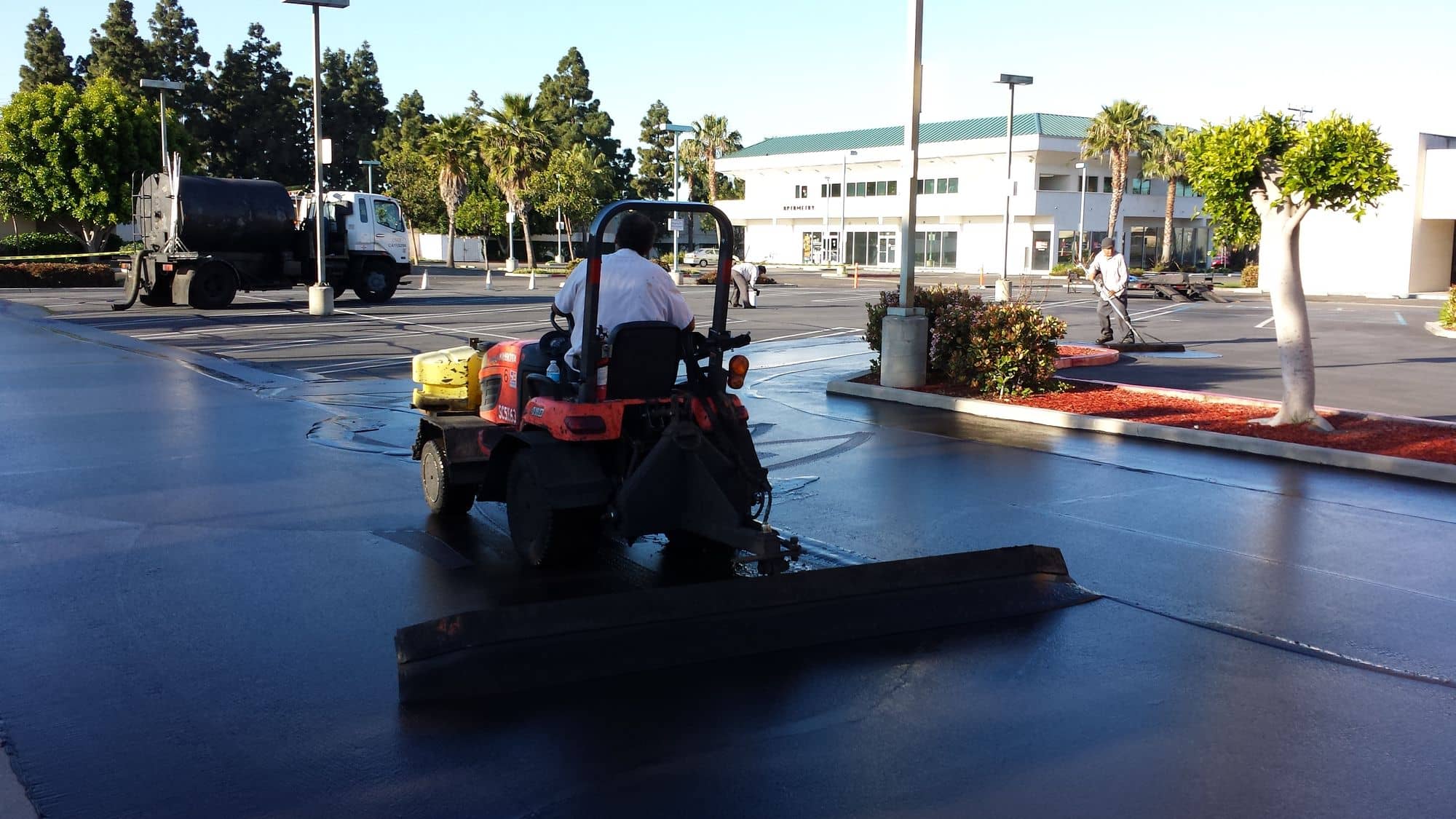
Sealcoat is a protective layer over the asphalt. Think of the skin of an apple protecting the fruit inside. It slows oxidation and weathering of the surface and restores a uniform finish that makes new striping stand out.
Why cracks come first
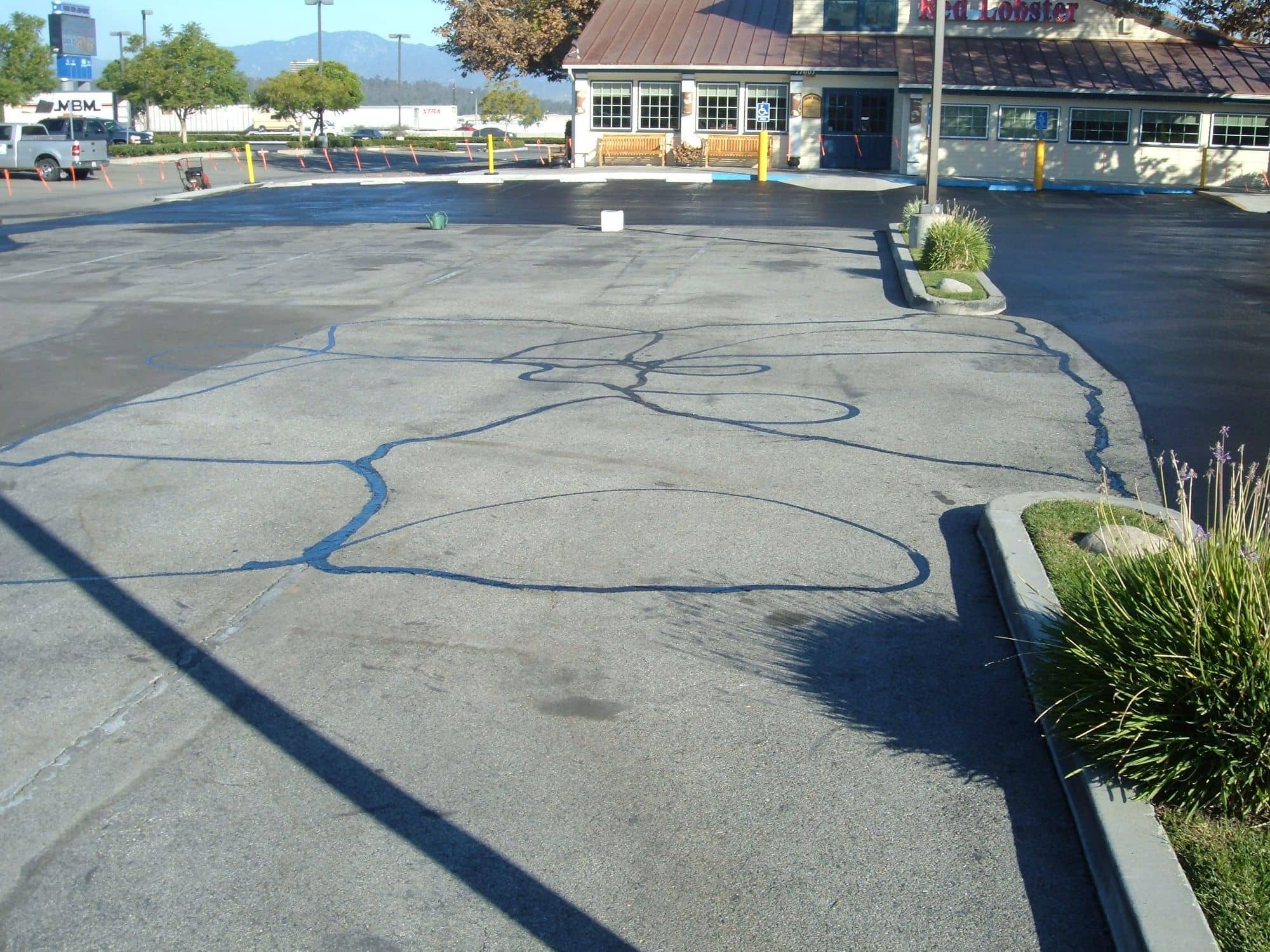
Sealcoat doesn't seal cracks on its own. Open cracks let water and the elements reach the inner layers of the pavement through the crack walls, so we fill them before coating. Pavement Interactive notes that crack sealant is typically used on early-stage longitudinal, transverse, reflection and block cracks, and that cracks should be cleaned out before sealing.
What sealcoat doesn't do
- It doesn't add structural strength. Pavement that is failing from below needs repair, not a coating.
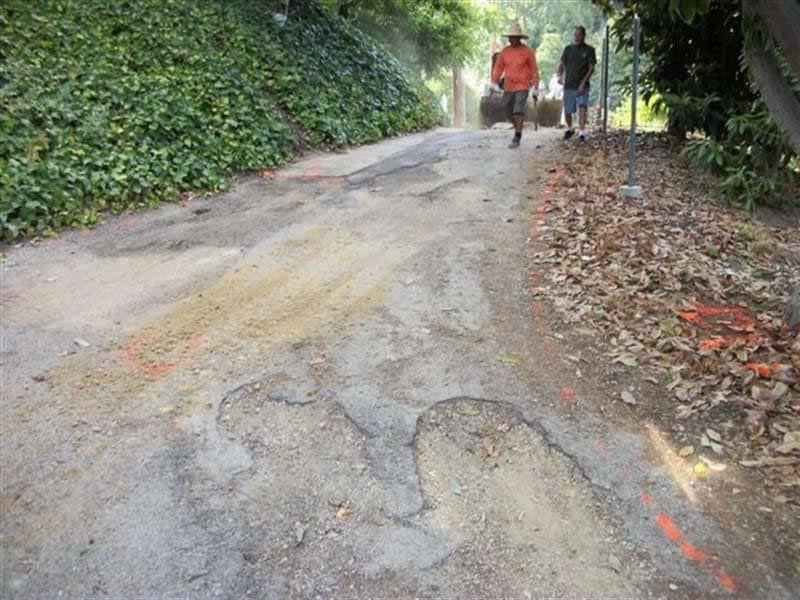
- It won't fix potholes or alligator cracking. Pavement Interactive notes that heavily fatigued pavement generally calls for patching or reconstruction rather than crack sealing.
- It won't stop water coming from below. Leaking irrigation or pipes have to be fixed at the source.
Sealcoat or slurry?
A slurry seal adds fine aggregate to the asphalt emulsion, so it can also fill minor surface defects and improve texture. See slurry seal types I, II and III.
A typical sequence
- Repair failed areas (skin patch or remove-and-replace) where needed.
- Clean the surface and fill cracks.
- Apply sealcoat across open areas and by hand along edges and curbs.
- Let it cure, then restripe.
Every lot is different. Your estimator will walk the site and recommend what it actually needs.
Sources
- Crack Seals, Pavement Interactive