MGB Construction works in both asphalt and concrete, often on the same property. The two materials aren't interchangeable. They are built differently, carry loads differently, and suit different parts of a site.
Asphalt is flexible pavement
Asphalt pavement is designed to flex slightly under load. According to Pavement Interactive, a flexible pavement “relies on a combination of layers for transmitting load to the subgrade”: the asphalt surface spreads the load over a relatively small area, and the base and sub-grade beneath it do much of the structural work.
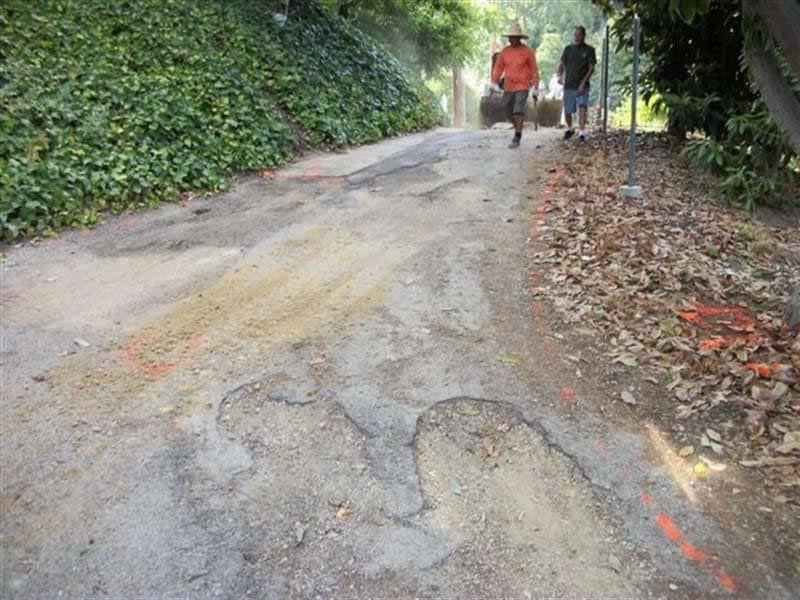
That's why base quality and thickness matter so much with asphalt, and why water in the sub-grade is so destructive. Our article Why is my pavement failing? covers what happens when those layers are compromised.
Concrete is rigid pavement
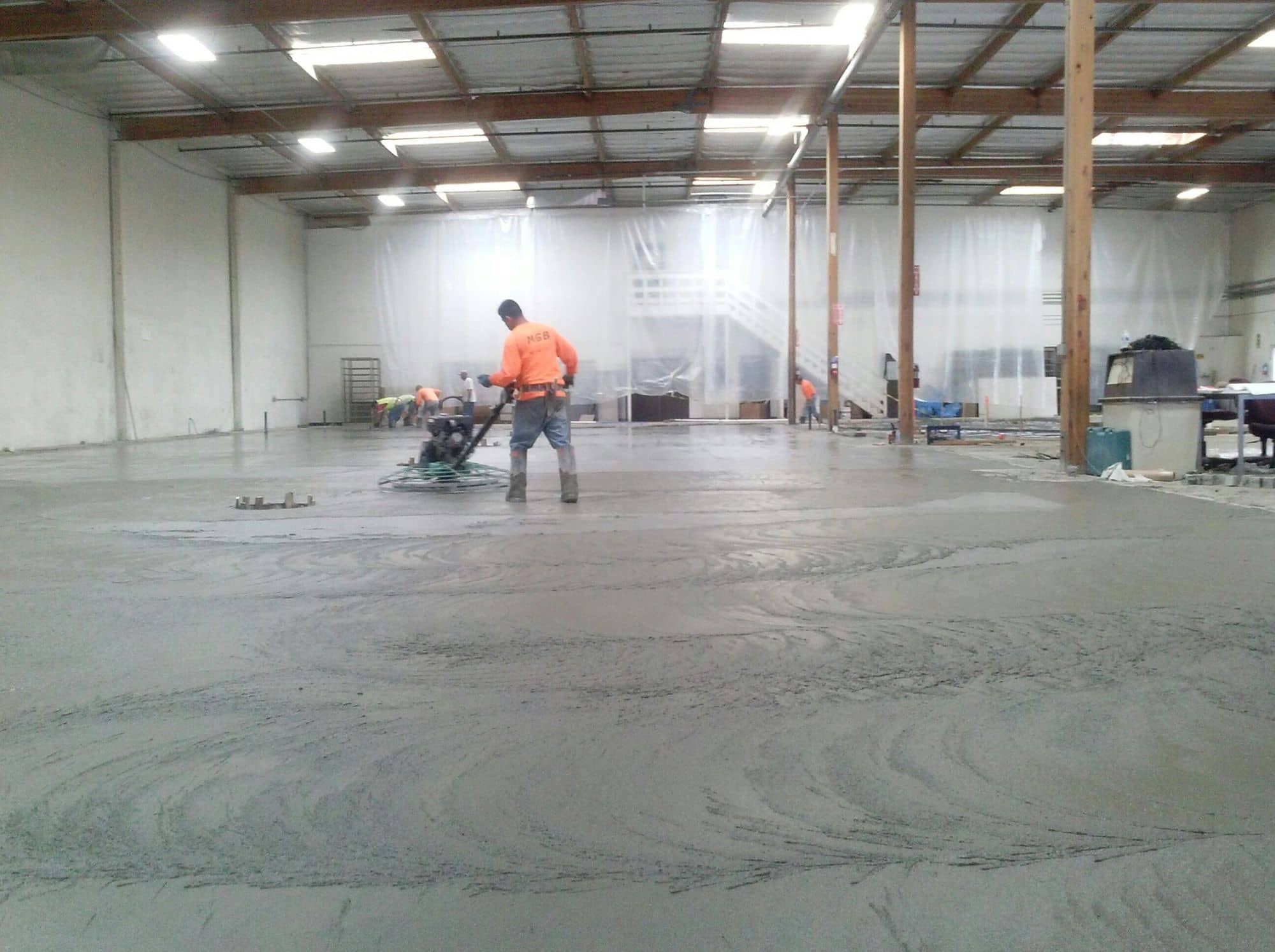
Concrete is much stiffer. Pavement Interactive notes that because of that stiffness, a rigid pavement “tends to distribute the load over a relatively wide area of subgrade,” and “the concrete slab itself supplies most of a rigid pavement's structural capacity.”
Maintenance over time
Pavement Interactive's general guidance is that flexible pavements “generally require some sort of maintenance or rehabilitation every 10 to 15 years,” while rigid pavements “can often serve 20 to 40 years with little or no maintenance or rehabilitation.” Actual performance depends on design, base, traffic, drainage and climate, so treat these as broad engineering generalizations, not promises for any specific project.
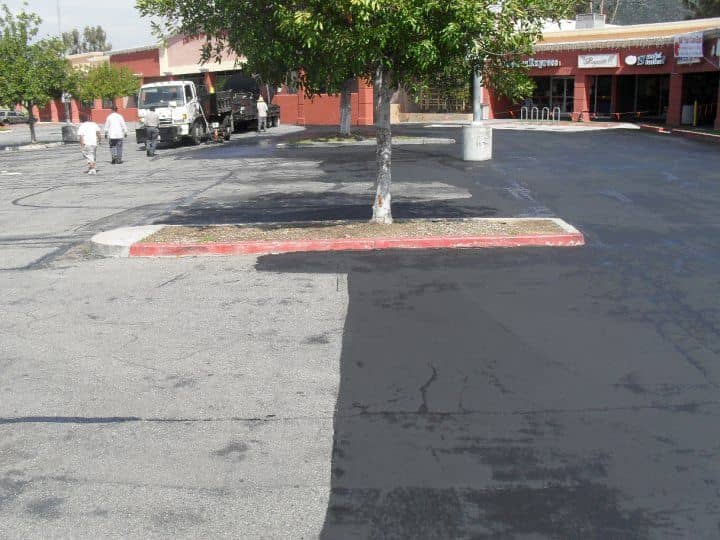
For asphalt, that maintenance is often preventive: crack filling and sealcoat slow the oxidation that Southern California sun accelerates.
Where each typically goes on a property
| Typically asphalt | Typically concrete |
|---|---|
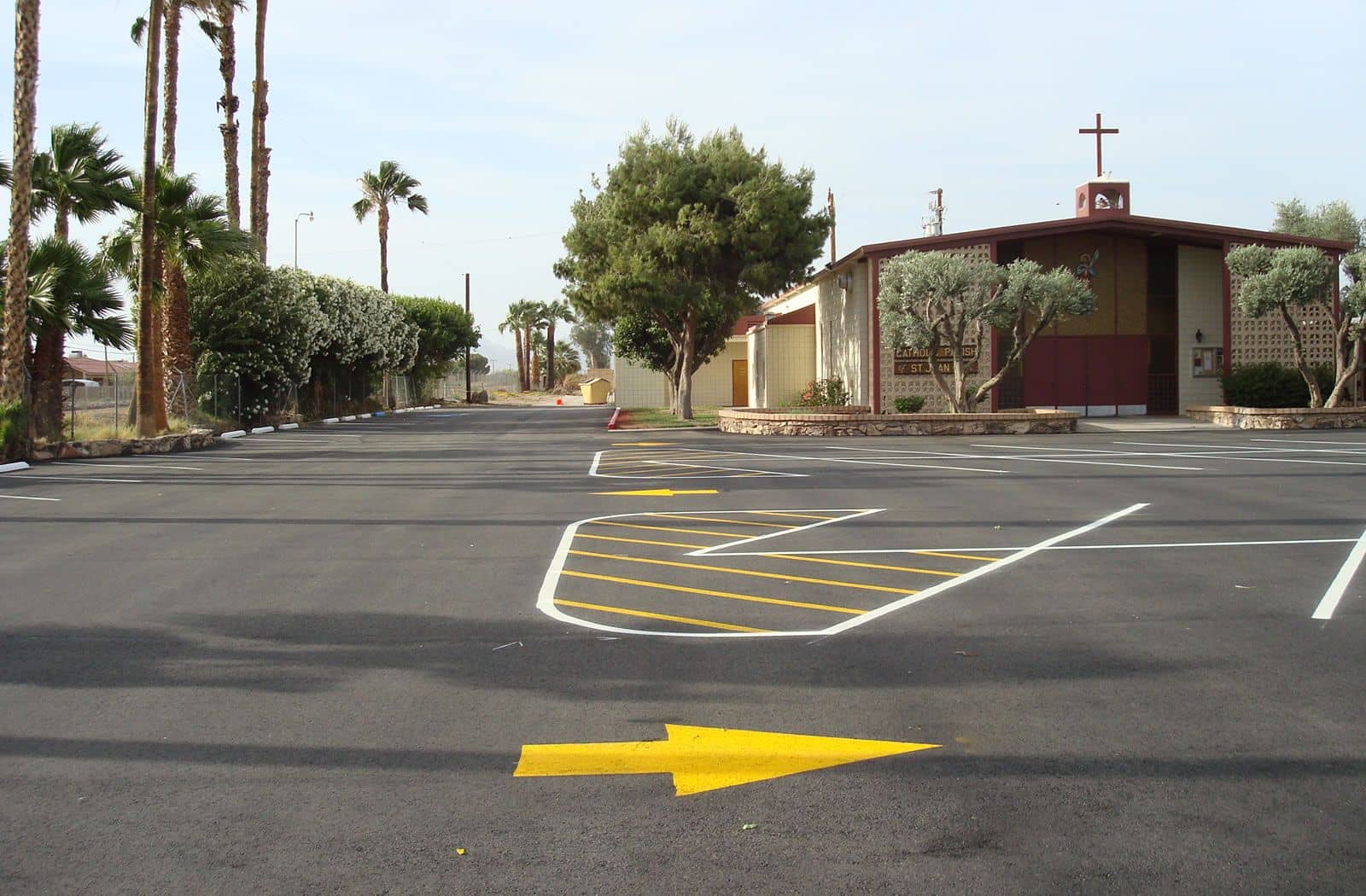
| Parking lots and drive aisles | Curb and gutter, mow strips and all curbing |
| Private streets and access drives | Flowlines and water-flow features |
| Overlays over existing pavement | Slabs, foundations and equipment pads |
| Speed bumps and humps | Walkways, patios and stamped or colored finishes |
| Slurry coats and sealcoat | Curb ramps with detectable warning surfaces |
Questions to ask before you choose
- What loads will the surface carry: passenger cars, delivery trucks, trash trucks?
- Where does water go now, and will the new surface change that?
- Is the existing base sound, or does it need repair first?
- What does the budget allow now, and what maintenance can you plan for later?
Sources
- Pavement Types, Pavement Interactive